The world seems to have a schizophrenic attitude towards science fiction, fantasy and horror these days.

It could be argued there has never been a better time to make genre films and TV.  Back in the bad old days you could probably count all the examples of science fictional TV and film on the fingers of a very small collection of hands and even after Star Wars arrived you could still, for a while, keep up with all the imitations that seemed to spring up overnight. But in recent years it has become impossible. There is simply too much of the stuff for one person to keep track without spending all their waking hours watching DVD box sets.

And yet a love of genre books is, as it has been for a long time now, considered far less of a good thing.  Admit to this and one still runs the risk of being considered a "nerd" or "geek" with all the negative associations that entails. Even those who don't make such rash generalisations still wonder whether it isn't perhaps time you grew out of it. Of course this is a grave misconception and a misjudgement of the content of genre books as I have discussed before in this very blog.  But yet the stigma remains.

How does one explain this difference in the popularity of the visual media compared to print?  I suspect that it is because nowadays the visual media are all about spectacle not story. The audience at large seem to really enjoy watching unfeasible large spaceships crashing into major landmarks in 3D without giving too much thought to why this is happening.  And it could be argued that the reason many adults require the spectacle to be ever more gargantuan and realistic is so they don't need to tax their imagination too hard...

And this I think is the nub of the matter.

As children we have overactive imaginations, and this could be why most children's fiction, when it comes down to it, is "genre" - witches, wizards, talking cats and dancing skeletons alike. However at some point during the growing up process there is a tendency in modern culture for people's imaginations to begin to calcify - perhaps partly as a result of having such spectacular eye candy fed to them in huge quantities - and so if they're to genuinely enjoy something out of this world then they'd prefer all of the visualisation to be done for them. Show a five year old child an episode of classic Doctor Who and they are rapt, caught up in the story, their imaginations filling in what the early 1970s BBC budget couldn't stretch to at the time. Show a ten year old child the same story and they may dismiss it as looking really fake.

And this may be why genre books don't share the same popularity as TV and film - they require a childlike imagination to supply the special effects and get their head around the fantastical concepts being put forward therein.  Some people are lucky enough to retain this perspective despite being repeatedly asked haven't you grown out of that stuff yet?

Perhaps they haven't but this is by no means a negative thing. The downside, if there is one, comes when attempting to enjoy the now highly popular visual genre stories.

The thing about written science fiction or fantasy is that even though it may include stuff that is patently absurd (and fundamentally inaccessible to some readers who can't be holding with all that weird shit), it works as long as it is consistent within itself and where it refers to the outside world, consistent with that as well. By definition a large proportion of the readers are going to be people who notice these things - the people for whom this matters.  To them such inconsistencies make about as as much sense as a sequence in a mainstream literary fiction novel about being able to see Edinburgh Castle from the top of the Post Office Tower in London. It's patently absurd.

The problem with visual science fiction and fantasy is that when writing for the mass market - who are chiefly interested in the spectacle - there will always be the temptation for the creators to cut corners when it comes to plot and consistency.  Gravity on the Moon appearing to be the same as on Earth? No problem, they won't notice.  Instantaneous radio conversations over a distance of light years? So? A spacecraft being able to travel to another star system with no mention of hyperspace, warp travel or some other method of FTL? Who cares?

There are those that care but they run the risk of being derided if they dare to point this out.  Whilst some people may go too far (sometimes background explanations can be taken as read with a reasonable amount of knowledge of the kind of set up the author had in mind) it does matter.
If you are going to use the genre furniture and equipment then you have a responsibility to use it correctly.

Whilst some howlers may slip under the radar for many, for those that notice they stick out like a sore thumb.  I have recently been watching and enjoying the Battlestar Galactica prequel Caprica but my enjoyment of the show was nearly derailed in the first couple of episodes by Daniel Graystone repeatedly claiming that a human consciousness takes up 300 megabytes of data storage. If true you could comfortably keep a family of five on the kind of USB stick they give away free at conferences.

I have no idea why this awful clunker got through but can only assume that it was a piece of placeholder text that accidentally made it through the script editing process.  It would have been so simple to fix.  Creator Ronald D Moore had already emphasised the differences between the Twelve Worlds and our own singular one in a number of different ways - the characters are paid in Cubits instead of Dollars, use the word Frak instead of Fuck when they're upset and have an exciting afternoon out watching a game of of Pyramid instead of Basketball.  Would it have been too much simply to have had them calculate data storage using Gigabases or something nicely unspecific?

It may sound nitpicky but this is central. There's nothing wrong with being weird, different or absurd, as long as you are consistently weird, different or absurd. Even if the world being described uses magic rather than science to tell its tales, it still has to have rules.

Otherwise the temptation is there to make any problems your characters are facing go away for no readily apparently reason. And no matter how many exploding planets or giant robots you throw at an audience, that is the kind of thing they're going to notice.

Self publishing has come a long way in a very short time. In the not too distant past it still bore the stigma of Vanity Publishing, a disparaging label casting aspersions on the motives and character of the author. But now? Now it's Print-On-Demand, the unspoken implication being that there is a demand out there for what you've written. These labels make all the difference to how the process is perceived and how seriously it is taken.

But the major distinction is the way that the modern process works. You no longer have to shell out for hundreds of hard copies of a book that run the risk of ending up under the bed in ten years' time - in fact you no longer have to shell out for anything. All you need to make a book available is the ability to write one and the willingness to spend some time negotiating the twists and turns of an online administration process.

As some of you may know (chiefly because I haven't shut up about it for the past six months) I have recently been through the self-publishing process and now have a book available on Amazon in both Paperback and Kindle format. It was suggested by kay_tofu on Twitter that I blog about the experience, by doing so perhaps in some small way giving guidance to others who are about to embark upon such an undertaking. I also received a query from Asher on Facebook asking me for some tips on how I did it. So in the hope that it will help them and others, here are my thoughts, my first blog on demand...

Perhaps it's an obvious point, but the most important thing is to have your book written and fully edited before you start the publishing process. You might find it useful to get feedback from a friend or three - someone reading your work with a fresh eye might spot errors of various kinds that you were unable to see due to prolonged proximity to the material. Typos can be persistent little buggers.

It's useful whilst you're still writing and editing to build up anticipation for your book if you can. This is tricky and really depends upon the subject matter. I was lucky in that the subject I chose to write about had a built in audience - but even so I had to make them aware of it. I published early drafts of some sections of the book as blog entries which I plugged on Twitter and Facebook. I set up a Facebook page for the book and encouraged people I thought would be interested to "like" (i.e. join) it. This can be hard work but pays off upon publication.

You might also want to consider investing in some added value for your book. Again this really does depend upon what you're writing about, but in my case I contacted commercial photographers who had worked with the subject of my book back in the eighties and enquired as to the costs of licensing photos for reproduction. You might choose to get an eye catching cover designed.

Once you've got the content in its final form, there are a number of Print On Demand services available. The one I went for was Lulu, and as such is the one I will describe here. I won't go in to huge detail as you can get all that on the site, but I will mention the important points.

Obviously the first thing I needed to do was sign up.

Lulu use the same interface for customers buying the books as they do for their authors so even once you have signed up it's not immediately obvious where to start. Clicking on the My Lulu tab brings you to a dashboard towards the top left hand corner of which is the My Projects panel containing a number of links under the heading Start a New Project. Clicking on one of these invokes a 'wizard' each step of which is largely self explanatory. You can save at any point and go back to it later.

Early on make sure you select the option that says:
Make it public and assign an ISBN to your title to sell your book in online bookstores like Amazon as well as the Lulu Marketplace.
Provided that is what you want to do of course! After this you get to choose the format of your book. My recommendation – if the book you're planning on publishing is mainly text – is to go for Pocket format, Perfect-bound and Black and White Printing (with full colour covers). This will allow you to set a reasonably low price - and that's what it will all come down to when it goes on sale.

When it comes to the choice of ISBN, select the option that reads:
Get a free ISBN from Lulu.com
Buying your own ISBN can be expensive so best to use the free service on offer here. You'll be given a downloadable graphic of the barcode for the new, unique ISBN that has been assigned to your book. Save this somewhere safe – you'll need it again when to comes to designing the back cover.

After this you'll need to upload the files comprising your book – and this is the point at which you might want to save your progress and come back to it later. Templates are available and you can upload Word documents although for best results it's worth using a desktop publishing program and exporting a PDF – this way you have far greater control over the end result. There are a number of different programs available but if you're on a budget, Scribus is an open source (i.e. free) package.


What you include on the pages of your book is up to you although follow Lulu's guidelines with regard to margins and bleeds. A left hand copyright page (including your ISBN) at the beginning is also required as are blank pages at the end making the page count up to a multiple of four. Before producing your final PDF have a look at what the inside of some of your favourite paperbacks look like. How are they laid out? How are paragraphs formatted? Is the text justified? Where do the page numbers appear?

Once you've uploaded the PDF content Lulu will give you an estimate of how wide the spine of your book is going to be – and with this information you can produce a wraparound cover using your desktop publishing program which gives you the greatest control over the book jacket. Remember to include the ISBN barcode on the back cover – the Lulu documentation contains precise guidance as to the required size and position.

When all the elements are online you're ready to publish – but before your book goes on sale to the public Lulu require you to order a proof hard copy to check yourself. This will take a few days. During this time you can have a look at the distribution packages available to you. extendedREACH is free and will get your book listed on Amazon – this will be sufficient for most purposes.

Once you've checked your proof copy it's time to go for it and click publish.

This might be the point at which you want to start trying to persuade people to buy your book. That's certainly what I did, although in retrospect I think this might have been a mistake. Few people have heard of Lulu and in general customers are loathe to sign up to another online retailer when they're already in bed with Amazon, especially given Lulu's P&P. Whilst you may get more money from sales via Lulu, sales on Amazon have far more clout. You can however buy copies of your own book from Lulu at "cost" (a few pounds) which will come in handy when it comes to promotion.

So, you might want to wait for your book to appear on Amazon before you start plugging it. This has the potential for being quite frustrating as it can take anything from six to eight weeks. In my case it was around seven. There's no formal notification - but if you're anything like me you'll be searching Amazon on a daily basis so you'll soon notice when it appears. In general it will appear on the US site a few days before the UK site.

You're now ready to begin plugging in earnest. Mention it on Twitter at around 5pm (UK time) with a direct link to the Amazon page. Plug it on Facebook. If you have a blog, consider putting an ad for it somewhere in the template; that way whenever anyone reads your blog they know there's more where that came from. Send review copies to anyone you know online with a blog on which they review books. If you are a member of Goodreads, consider setting up a giveaway promotion - this is where the copies of the book you bought at cost from Lulu come in handy. Recipients of giveaway prizes are encouraged to review their freebies and it's reviews such as these that will drive people to Amazon.

Once on your book's Amazon page, potential buyers will be more likely to invest in a copy if they can see that other people have been there before them and enjoyed it. Encourage your readers to leave positive reviews on Amazon. This is one of the most the difficult parts - no matter what their good intentions it is always far easier for people not to bother. Give them a hand by providing a direct link on your blog or Facebook page to the review form. This will be a URL like:
http://www.amazon.co.uk/review/create-review/ref=?asin=nnnnnnnnnn
where nnnnnnnnnn is the ASIN (Amazon product number) of your item, which you can find in the main URL of your book after /product/ :
http://www.amazon.co.uk/gp/product/nnnnnnnnnn/
These days it's well worth selling your book in Kindle format as well. Amazon make this easy for you. Once the hard copy is up on Amazon you may notice a section halfway down the page:

Sell a Digital Version of This Book in the Kindle Store

If you are a publisher or author and hold the digital rights to a book, you can sell a digital version of it in our Kindle Store. Learn more

Clicking the Learn more link will take you to a page which allows you to register with Kindle Direct Publishing. There are full instructions here - it surprisingly easy to make your book available, especially given all the groundwork you put in before publishing via Lulu. All you really need here is a properly formatted Word document (and the site contains all the details you need). Set the price as low as you can.

Once submitted it will probably take around 24 hours for the title to appear - and then of course you can start the promotional cycle all over again.

Keep banging away at it. You've got a book out. It's marvellous. Of course you want people to know.

I used to read newspapers more often than I do now, and back then I noticed a curious phenomenon.

Most newspapers had two distinct identities.

There was the main bit then at just over the halfway mark the quality of the content quality started degrading as it became predominantly ads, cartoons and crosswords. Then just impenetrable ads for increasingly bizarre products and services.  But if you persevered you would break free of this cruft and into another section of the paper altogether with stories and articles. It was like discovering a hidden city at the centre of the jungle.

The problem was this new section was concerned entirely with sport.

I was never interested in sport so as far as I was concerned this part of a newspaper's anatomy was analogous to the appendix. It didn't do anything and could safely be ignored. At times of World Cup or Olympics it did seem to become seriously inflamed but there was nothing really you could do about this.

The option of a sportless newspaper has never been countenanced. Merely suggest such a thing and your fellow human beings would probably look at you as if you'd just proposed breathing without oxygen; persisting in this suggestion would be enough to get you carted off the funny farm babbling about art and culture.

Because everyone else loves it. I've never understood why sport is held in such high esteem compared to, say, music or literature, but that's the way the world is. Whilst the sports section seems a waste of paper to me, there are people who are interested in it and far be it from me to say they can't read about what they love in the paper. Nevertheless, the prominence it is given is simply staggering - and on a day when a big sports news story breaks it will be all over the front and the back of the paper. I mean, there are things that I'm really interested in like space travel and music, but that doesn't mean I'm under any illusions that they'll ever enjoy the level of coverage currently enjoyed by sport, because more people like sport than like space travel, making the inclusion of a lengthy sports section in most newspapers a more reasonable proposition than a space travel section.

However, there are some people who are only interested in the sports pages. You most frequently see them on public transport, or at least it's their behaviour there that most easily gives them away. Usually male, he swaggers into the carriage and drops down into one of the seats. If there's a newspaper on the table you see him clocking it with acquisitive eyes.

This in itself is perfectly reasonable. Everyone wants something to read when they're travelling and a discarded newspaper is an irresistible draw. It's free and often not something that you would normally consider buying. The distributors of the Metro and other free papers have done very well in this niche of late. If you ever want to implant an idea into the imagination of city dwellers across the country all you'd need to do is get coverage in Metro. Never mind last night's TV, these days it's the derivative and frankly unbelievable stories contained therein that are the talk of the water cooler.

But I digress. Usually it isn't Metro that has been abandoned on a train for Mr Sport to pickup. often it's the Sun, the Mirror or the Mail, something small and tabloidy. Something easy to grab as Mr Sport now does. He then invariably flips it over to the sports page.

INVARIABLY.

It doesn't matter what is on the front page. It could be a massive earthquake in China with thousands dead, a new war in the Middle East, draconian new legislation from our government that makes it illegal to talk in public, alien invasion, the discovery of time travel or proof that ghosts are real.

Nah. He wants to read about the football.

It's another world and one I suspect I will never understand.

As far as buying our music is concerned, we've come a long way in what feels like a very short time.

These days it's far quicker and easier to buy music at the drop of a hat - furthermore there's a far greater range of music to choose from. We can pick and choose the tracks we want and best of all we don't even have to leave the house. The downside of this is of course that it can be dangerous going online drunk - a hangover is rarely improved by the discovery that one has bought the box set of Mantovani's 100 Golden Moments because it seemed like a funny idea at the time.

In general this means that things are more convenient and in some small way we are conserving resources. What's more we no longer have to cart around half a metric tonne of vinyl every time we move house and lets face it those cardboard boxes were always the heaviest ones. Usually designed for transporting bananas they also had a nasty habit of disintegrating halfway up the garden path of your new abode, depositing your complete collection of Cure LPs into a puddle. Including that signed copy of The Head On The Door.

But I can't help but feel that we've lost something pleasurable. Lighter and more convenient the modern method may be, but there was something exciting about seeking out vinyl; something I imagine is unlikely to be duplicated by waking up to discover that the new single by Florence and the Machine that you pre-ordered is now in the Purchased folder of your local copy of iTunes. Perhaps this lament for a lost format is in part a requiem for the passing of youth but not all of it I think.

Browsing the racks in record stores was always an exciting experience. You never knew what you'd find no matter how close an eye you'd been keeping on the music press.

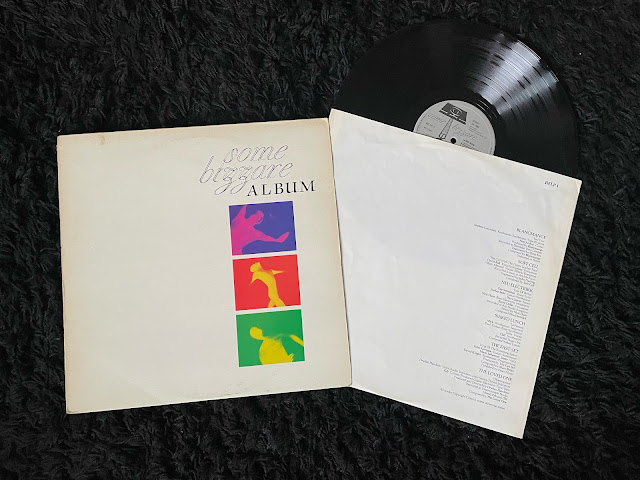
Especially exciting was the rack where they kept the twelve inch singles. Even if you had an encyclopaedic knowledge of the charts and all the records worth buying in it (having taped the top forty off the radio and learned it inside out), this was where the real treasure could sometimes be found. The expanded universe - these sometimes contained versions of the songs that would never be heard on the radio.

But the excitement started before you listed to the music. There were the sleeves. Often a huge glossy version of picture on the seven inch - but sometimes an alternative take on the same imagery. The most thrilling thing of all was that you were getting an LP's worth of picture often for little more than the price of the seven inch. The smell of the sleeves was more intoxicating too, perhaps something to do with the fact that it was printed on card. Sometimes I couldn't wait until I got home - standing outside the shop I would pull the sleeve from the snug plastic bag, push the sides so that it opened ever so slightly and INHALE. New record smell. Fantastic.

It was what was on the records that really counted though.

Sometimes these twelve inch singles contained exactly the same tracks as the seven inch - this always felt like a complete rip off, although I understand that the fact that the grooves were further apart meant that you got a far better sound when they were played in nightclubs. But most of the time you could at least hope for an extra track. This was good, something extra to tape at the end of the side of the C90 cassette onto which you'd taped the LP so you could listen to it on your walkman; sometimes it wouldn't fit in which case you'd need to use a C120, although the tape was thinner on these and had a tendency to snap. I once dismantled a C90 cassette and surgically implanted an extra five minutes of tape simply so I could fit one of my favourite LPs plus B-sides on it.

The extra track scenario wasn't entirely satisfactory. All it meant was that you didn't really need to buy the seven inch, and that was something that no collector wanted to hear. For a twelve inch to really be worth it, it would have to contain an extended version of the single itself. A remix. Something you would be unlikely to hear anywhere else.

The first of these I remember was the twelve inch of Spellbound by Siouxsie and the Banshees. This had an extra couple of minutes on the end, a staccato drum sequence segueing into an instrumental version of the final few minutes of the track, eventually joined by Siouxsie's wailing backing vocals before slamming to a halt again, for real this time. It didn't add that much to the song but it was nevertheless exciting to hear something so familiar in a brand new way.

The electronic nature of a lot of the music in the early 80s meant that it was fairly easy to produce extended remixes in this way. These were wonderful, perfectly in their element when you were grooving on down on the dance floor at The Camden Palace, high on Pernod and black, but not perhaps as stimulating in the bedroom. When was the singing going to start? They were sometimes so long that there wasn't a hope in hell of fitting them all on a cassette either.

But you had to admit they were good value for money, and if you loved the song then it was all the more for you to get your ears round. Sometimes the remix was distinctly unsuccessful - the new section of Depeche Mode's Meaning of Love started with a recording of one of the band saying "What do you want to do then, what shall we do?" hardly inspiring confidence in the alternative version of the track that was to follow...

However, one band took to the concept of the twelve inch like a duck to water and dragged the format so much further from it's comfort zone than anyone else. Soft Cell.

Their first single, Memorabilia, was designed with the twelve inch in mind and was way ahead of its time (effectively an acid house track in 1980), but it was with their next single and biggest hit Tainted Love that they took the twelve inch somewhere it had never been before. At first it sounded just like the seven inch and then halfway through an instrumental section you realised that something very unusual was happening. The song was mutating before your very ears. First the bass line, then the synth notes. Before you realised what was happening you were listening to another song - Where Did Our Love Go.

For their next single, Bedsitter they took this format experimentation further. The track listing was the same as for the regular single - Bedsitter c/w Facility Girls, but each song was more than twice as long as its seven inch cousin, padded out not with recycled instrumental but whole new verses and musical sections. Make your single bed and push the tea leaves down the drain, take a long deep breath and start the night life over again...

This was a pattern they would repeat throughout the lifetime of the band making Soft Cell twelve inch singles amongst the best value and most enjoyable of the era.

You can now relive this by buying the Soft Cell Twelve Inch Singles as a 3 CD set or downloading them from iTunes.

But they just don't smell the same.

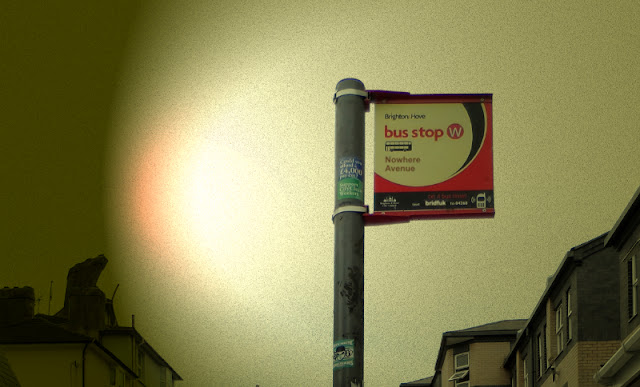
Ever since moving to this city I've had a Grudging-Acceptance / Hate relationship with the local buses as anyone who has ever read my blog or followed me on Twitter or other social media will already know. I never shut up about it and am in fact surprised you're still following me. What's that you say? You're not? Oh dear.


There are many reasons for this (the bus thing, not the social media thing). For a start there was the whole breaking my arm and lying about it incident which I've already chronicled in this very blog, and then there was the time that The Worst Thing That Has Ever Happened occurred on the top deck of a number 25. But on the whole these specific events aren't a major part of the general unpleasantness surrounding such journeys.

It's everything else.

For a start where I live the nearest bus stop is on a large square - the other side of the square to the direction from which I enter it. This means that I can see my bus is already at the stop from a considerable distance. So I have a choice. If decide to forget about it and walk to the stop in the hope of catching the next one, the bus will hang around and hang around and hang around and hang around, only pulling away at the last minute, leaving me in no doubt whatsoever that had I run for it, I would have caught it without a problem. On the other hand if I decide to run in the first place, it will pull away at the last minute anyway.

I have to remind myself that running for it is always a bad idea. A large number of different buses call at this stop so whenever I find myself hurtling up the road like an overweight orangutan having ill-advisedly decided to try and catch this one, there are people standing at the stop who aren't getting on my bus. They can see me running for it. It's blatantly obvious what I am doing. I'm running for this bus. The bus beside the open door of which they are currently standing. I'm running for this bus. The bus whose driver they are within easy earshot of. I'm running for this bus. The bus to whose driver they could easily call out, "Hang on mate, there's someone coming," without even breaking a sweat.

But do they do that? Do they buggery. They just stare with a slow-witted bovine lack of interest as I careen up to the stop cursing as the cloud of exhaust from the departing bus billows into my face.

"Thank you," I sometimes say to them with a pointed sarcasm, "Thank you very much!" This statement met with looks of blank incomprehension.

Eventually of course I do manage to catch a bus. Sometimes I already have a pass in which case no problem, but on other occasions I've got to buy one from the driver. To be fair some drivers are OK with this but for others you'd think being given a £10 note for a £4 fare was the most terrible transaction that they'd ever been forced to take part in. They sigh, they roll their eyes, they make a point of writhing uncomfortably about in their seats just to demonstrate how difficult extracting a fiver from their top pocket is. Once or twice I've been told they don't have the change and I've had to get off again. Pull the other one. With fares that high they should expect £10 notes to be common currency.

But once on the bus you have to contend the other passengers.

It's not unusual for people to prefer to sit on their own if there is room, it makes psychological sense. I have actually covered this before in another blog entry but I think it's worth repeating here. We probably all remember the young Ben Elton's famous routine about double-seat on the train, "You don't want some bastard sitting next to you, do you?" This is true of course, and probably one of the reasons that so many of us remember the routine; it resonated. Given a choice I'm sure all of us would prefer to be left alone with our book or Kindle in the mornings without some stranger intruding upon our personal space and farting. But sometimes this is unavoidable - in the rush hour, seats are at a premium. But of course this doesn't stop some people trying to keep their double seat to themselves.

They're invariably male.

They put their rucksack (it's usually a rucksack) on the seat next to them before spreading themselves out, tree trunk-like legs splayed wide open. They have a copy of the day's Metro in one chunky mitt, having managed to cunningly fold it open to the sports page with just one hand. They won't even look at you when you ask to sit down, although an expression of utter contempt flickers across their face as you do so; how in the world could you have been so utterly selfish and annoying as to have wanted to sit down? they seem to be thinking. Even if you do manage to insinuate yourself into the space next to them they try and take up at least one and a half seats, refusing to fold themselves up even a bit. What's even worse is when one of them decides to sit in the empty seat next to you. Through a process of pure physical intimidation they overflow into your seat, lumpen elbows digging into you, legs automatically splaying open.

What I find impossible to understand is how they can maintain this inconsiderate facade even in the face of a crowd of other people so obviously in need of a seat.

A few years ago I was unlucky enough to encounter Maximus Lummox, the God of this behaviour. For a period of about a month I used to see him on the upper deck on the way to work. He was unnecessarily large; not fat, just built to the wrong scale. He wore a permanent expression of sleepy arrogance on his dull features, half closed eyes peering superciliously out at the world from behind a shaggy curtain of badly cut dark brown hair. He used to sit sideways across two seats, legs blocking the aisle and to add insult to injury used to hook one elbow over the back of the seats thus even invading the space of whoever was unfortunate enough to be sitting behind him. When people were brave enough to ask him if they could use one of the seats he was taking up he looked slowly up and regarded them with an expression of dull uncomprehending hatred. More often than not he didn't move an inch.

On the other hand it is annoying when someone sits next to you even when there are plenty of free seats - obviously too lazy to walk an extra couple of metres to the spaces near the back. However, you rise above this. You are not a disciple of Maximus Lummox. Given your magnanimity it does then seem rather ill mannered of them to move to another double seat in front of you as soon as it becomes available. What, do I smell or something? you wonder sarcastically.

Thankfully most of the journeys I partake of are shorter than forty-five minutes. No matter how much double seat hogging, raucous cackling or pungent flatus I have been subjected to, I can always escape when it's time to get off.

In theory.

Sitting upstairs as I often do, I remain blissfully ignorant of what is happening on the lower deck, by the exit. Unlike London buses, most of the fleet here are only blessed with one door. Unfortunately a lot of people seem to prefer to stand right in front of it in preference to sitting on the seats available further back. As I squeeze pass with an "excuse me please" I am subjected to a barrage of tuts, sighs and rolling of eyes. By the time I actually reach the exit the people on the pavement have already started piling on, leading to further disdain being heaped upon my shoulders as I have to push past them as well.

But what can you do?

I don't have a car, and whilst cycling is greener and at least keeps me fit, having to deal with car drivers, pedestrians and other cyclists is at least as infuriating as catching the bus. The train stations are at least 20 minutes walk away, but I am to stand the remotest chance of retaining my sanity whilst I still have to commute I am going to have to let the train take the strain.

Or I could just chill out.

I imagine I will probably start ranting on about trains in the not too distant future, then...

When most children play "lets pretend" they imagine a thing that isn't. Whilst I did do that as a kid, I also used to have little games in my head in which I imagined a thing that already was...

The first major incidence of the phenomenon that I can now recall was back in the seventies when we had an German exchange student staying with us, a woman studying architecture. As a favour to my parents - perhaps as a way of saying thank you for letting her stay - she took me off their hands for an afternoon on a trip to visit Welwyn Garden City and Harlow - of some significance to students of architecture and town planning as they were both "New Towns" built in the twentieth century in the commuter belt to ease overcrowding in London.

Whilst we were in Harlow I started playing a strange game with myself. To clarify, this was playing a game in the sense of "let's play Star Trek" rather than "let's play Tiddlywinks". I started imagining that I was visiting a futuristic New Town called "Lowich". In almost every sense the details of the game and the details of reality were exactly the same (except for the name of the city) but for some inexplicable reason I got much more enjoyment out of the situation with a fictional filter placed between my mind and reality.

In the game I was a character visiting this special new city. I tried to look at roadsigns and the names of buildings in such a way that both the "Har" and the space after "low" was obscured so that I could imagine I was actually in the story.

This wasn't the only occasion that I had this strange sensation, this compulsion to insert a layer of fiction between myself and the real world. Sometimes I would watch TV programmes pretending that I had never seen them before. I particularly remember watching the title sequence of The Goodies with this mind-set. If I had never seen this before, I mused, what would I think?

We do. Anything. Anytime.

A series about three guys who did exciting things like dancing on the moon, being cowboys and somehow being back in cavemen times. Which of course was what it actually was, but watching it through this fictional membrane of never having seen it before somehow made it much more enjoyable.

Similarly Go With Noakes. Viewed through the first-time goggles it suddenly became about Noakes the Action Hero, who had all sorts of adventures like jumping out of aeroplanes at twenty-five thousand feet. Looking at him through a refractive surface of un-me allowed me to unhook his familiarity to me from years of Blue Peter.

Because what most of these scenarios boiled down to was this: What if I wasn't me?

The outside world remained the same, it was just my reaction to it that was different. I made my reaction a story, most of the time one that was far better than reality. The Goodies and Go With Noakes were far better programmes when viewed through the smoked-glass of otherness, and Lowich was a far better place to live than Harlow.

Of course I also did used to enjoy the more traditional mode of play. Often we would "be" characters from Star Trek - I was always Spock and my friend Peter always insisted on being Kirk. Peter/Kirk was obsessed with the idea of "going down with his ship" as frequently the games seemed to involve the Enterprise being about to blow up. I still have a very clear picture in my head of looking back as we escaped in the shuttle craft (of looking back as we walked away across the playground) and seeing Kirk (Peter) sitting alone on the bridge (alone on the steps outside a fire exit) waiting to be consumed by fire as the ship exploded. We could never persuade him to come with us.

As I got older these kind of games became harder to play as the imagined world jarred against what I could see was in front of me. Perhaps this is where the appeal of the "imagining a thing that already is" came from. They couldn't be spoilt by incongruous reality because they contained reality.

I still play them to this day.

I miss the Sunrise.

I miss waking up and instantly knowing how long it is until I have to drag my sorry carcass out of bed to face first the computer world (for my early morning brain workout) and then the outside world as I travel to my place of work (which - if I am feeling energetic - involves my early morning body workout).


The problem with waking up and it still being pitch black out there is that you have no idea how much time you have left before the alarm clock (in my case it's an app, but the principle is the same  - and no matter how pleasant an alarm tone you have chosen you will come to hate it) assaults your ears forcing you to get out of bed. You could have hours in which to fall back asleep and have more dreams or it could be less than five minutes until the alarm is due to go off.

Let's face it, by the time you actually get motivated to check the time it's usually the latter. You lie there in full wakefulness dreading the noise that is due to come your way any second and yet without the gumption to simply get up, switch the alarm off and start the day a tiny bit early.

And what do you do when the alarm finally goes off? Snooze.

The snooze button is one of the most pointless inventions ever devised by man.  Using it is an exercise in self loathing, an admission of weakness. If you wanted to get up at 6.30am then bloody well get up at 6.30am. An extra five minutes will do you no good whatsoever; all it means is that you have to go through the alarm hell all over again. Pressing the snooze button twice is even worse and any more than that - well you might as well set your alarm half an hour later and resign yourself to getting into work later.

The thing is that by early January you really feel that surely it should have started at least pretending to get lighter in the mornings again. Wasn't the Winter Solstice, the shortest day, back in December before Christmas?

Ah but it's not as simple as that. It never is.

The Earth is a contrary bugger and it may surprise you to learn that whilst the last Solstice may have been 22 December 2011, the nights stopped drawing in and Sunsets started getting earlier on 16 December 2011.

Conversely Sunrise continued getting later and later until this morning and it is only on 5 January 2012 that it will start getting earlier again.  The problem is that it changes so damned slowly at this time of year which only serves to exacerbate the feelings of inertia and darkness. It's improving though - whilst by the middle of January sunrise will only be six minutes earlier than it is now, by the beginning of February it will be twenty five minutes earlier. By the time we reach the Spring Equinox, Sunrise will be getting earlier by three minutes every single day. Unfortunately this is as good as it gets, it slows down again by the time the Summer Solstice rolls around.

In an ideal world I would prefer to live in a world of perpetual sunlight.  If I want darkness I can always buy thick curtains.

Sadly this is impossible unless I spend six months north of the Arctic circle and then immediately fly to south of the Antarctic circle for the next six. Quite apart from the expense of having to maintain two houses in polar conditions it would cost a fortune in airfare.

The person that invents a bulb that really does look and feel like sunlight is going to make a fortune. Only then will we be effectively freed from the tyranny of the turning planet.