Posts

Showing posts with the label computer

Linear time as a revolutionary act

Image
These days if something changes for the worse it's usually because the people behind it are cutting costs and corners. The feature that has been retired or removed simply cost too much and is now being eliminated in order to shave off a minuscule amount of expense in order to increase the profit margin by a tiny increment. Any pretence of providing good customer service and better products has disappeared from many businesses as they wring out the last few droplets of money from their business model as the pyramid scheme of "buy low sell high" collapses. However there's one kind of business where they're constantly scrambling to implement a feature which it would be far easier and cheaper to just leave out. Social media companies appear to be desperate to scramble the chronology of people's timelines despite the fact that leaving it chronological would almost certainly be cheaper from a programming point of view. Linear time is the default - it comes free with...

Old Objects of Desire

Image
There is simultaneously something sad and laughable about the sight of redundant technology being thrown away. These old plastic and metal boxes, most of them that off-white grey that was so popular for a while, tumbled together in a skip or a dustbin. How clunky and huge they seem, how ridiculously inefficient and pathetically low in capacity. That shoebox-like cabinet that used to sit on someone's desk with a total storage of 100MB, an amount of data that would now fit into something the size of a toenail clipping ten times over. How far we have come in such a relatively short space of time. And yet in a way this old tech is also oddly exciting. When we look at it we remember how not that long ago such a thing was an object of desire. That it epitomised bold new developments in technology that seemed so groundbreaking and enviable. That hand-held scanner that I was so desperate for in the early nineties that looked like a bizarre hybrid of a torch and a miniature vacuum cl...

We're Not Computers 2: I Think, Sebastian, Therefore I Am

Image
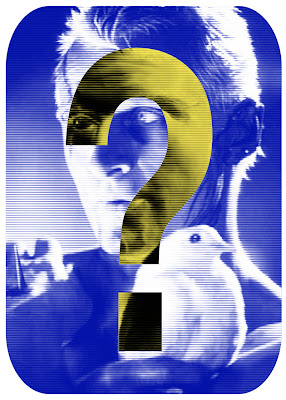
Use your new friend as a personal body servant or a tireless field hand. The custom tailored genetically engineered humanoid replicant, designed especially for your needs. Last time I was attempting to grope my way towards an understanding of the nature of our bodies and brains as machines by considering the eye. It was a useful exercise; and I concluded that whilst an eye might be a squashy camera, vision is not the same as the software we might use to display the images. After all a digital camera attached to computer is nothing without someone looking at it, interpreting it, being aware of it. At the moment a human mind is the only thing that can do this. Until we develop computers that can interpret and be aware of what they're looking at that is. We may not be as far off this as we might think. Whilst it's unlikely that we'll develop replicants capable of expressing wonder at having seen attack ships on fire off the shoulder of Orion by November 2019 (or soon...

We're Not Computers 1: I Just Do Eyes

Image
Ever since we invented computers we've started to think of our own brains as computers, dubbing the computers themselves "electronic brains". Neither is the other. Whilst I have no doubt that one day we will invent thinking machines, sentient intelligences with no appreciable difference from our own minds, at the moment we're barking up the wrong tree. In fact I would go so far as to say we're barking up a tree in the wrong forest. On a different continent. This is because the way we think about our minds and brains isn't really how they work. Perhaps unsurprising seeing as it's the brains themselves doing this thinking. We imagine we are organic computers and therefore built electronic boxes in our own mental image; how we thought of ourselves at the time. If we'd been able to build computers in an earlier age, say when the heart was imagined to be the seat of consciousness, perhaps our computers would have resembled pumps. To demonstrate the ...